Ebook
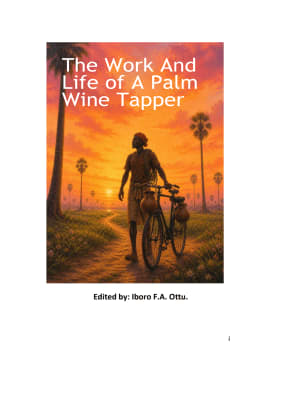
The Work and Life of a Palm Wine Tapper
Chinenye Precious Owunwanne
Ebook · References
The Work and Life of a Palm Wine Tapper
by Chinenye Precious Owunwanne
₦2,500 Pay once and read online.
- Type
- Ebook
- Author
- Chinenye Precious Owunwanne
- Genre
- References
- Year
- 2026
- Pages
- 98
About this ebook
This book is one of the numerous products of hard work I have been privileged to come across among secondary school students. Given my experience as a teacher in the Nursery/primary, secondary, and tertiary rungs of education, and with an early and extensive experience in the promotion of music, poems, and most of the arts, I see this work from the depth of creative imagination and the acme of thought. The book is one work that will be appreciated by the African family, especially parents that appreciate cultural values and renaissance, including anthropological sophistry. This is because the African society is not only threatened by the loss of her multifaceted artifacts and folklore expressed in mores and languages, but also by her lifestyle and traditional occupations.
This book is a call to our parents to help their children have a taste of where they come from and the value of heritage. Having grown up in the village setting, the whole episodes of this work, to me, is like a recollection of knowledge as Plato enunciated in his concept of “Anamnesis” and further articulated through his teacher Socrates. It brings to the fore innate knowledge, experience and the “meno” experiment. In my early years as a child, I can easily recall the images captured by the palm wine tapper whenever you encountered him early in the morning as you walk to the stream to fetch the early filtered water. On your way back from school in the afternoon, you will also encounter the palm wine tapper with his traditional calabash, mobile fire in the fibre of the plantain stem and other “gadgets”. In the evening, while returning from the village’s local market, you will also encounter him with complete artifacts of his trade.
The narratives in this work are so natural that they will help our children who are born and bred outside their villages to be able to appreciate what they have missed culturally by not endearing themselves with their communities. In most of my interaction with my students in the teaching of Social Psychology, I would readily ask them how many times they have visited their villages. Some would say once or twice and most of them would be twenty years and above! When you ask them that such visits may have been occasioned by the need to attend either a burial or traditional marriage ceremonies, the truth behind the observation makes them burst into laughter!
This book will help the readers, especially young persons to always seek their roots by getting acquainted with their communities and associated occupations and lifestyles.
The book is highly recommended for students, teachers, and even tourists who seek to understand African foods, culture and lifestyles.